


.svg)
.webp)
Biobased Prefab Interior Wall
Biobased prefab interior wall
A sustainable and low-work alternative
Due to the enormous sustainability challenge, the need for sustainable alternatives for CO₂ intensive and polluting materials in construction is growing. An architect, producers of biobased panels and a builder joined forces. Together, they developed an innovative solution: a light, healthy and low-emission building material that is easy to assemble.
Sustainable alternative
In 2023, The Green Village organized an opening event for the Biobased Boulevard testing ground. During this event, participants explored both the bottlenecks and the opportunities for the large-scale use of biobased construction products. They did this on the basis of practical cases.
One of these cases concerned the university's challenge to replace existing interior walls with a sustainable alternative. What options are available? At the discussion table, the participants came to the conclusion that there is no sustainable, healthy and easy-to-install alternative available yet.
They then decided to continue talking together. The result: the joint development of the Prefab Biobased Wall Cassette.
.webp)
.webp)
The innovation
The Prefab Biobased Wall Cassettes offer a light, healthy and low-emission alternative to polluting interior walls. Because they are easy to install and finished immediately, they reduce construction time and make durable walls more widely applicable in utility buildings. It reduces CO₂ emissions, nitrogen and particulate matter, and reduces labour and transport. In doing so, it offers a scalable solution for emission-free construction.
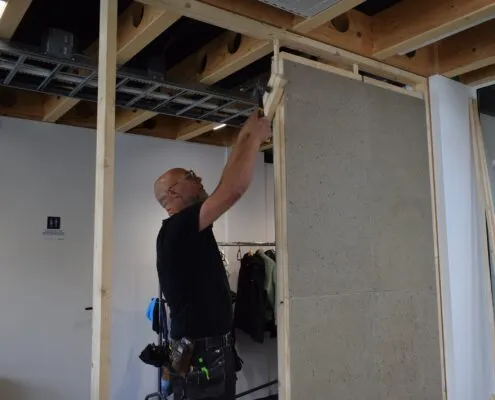
Testing at The Green Village
In our field lab, the consortium is investigating how quickly and easily an interior wall in utility buildings can be installed using biobased interior wall cassettes. By being present at the installation of the wall in the Office Lab, the consortium gets immediate insight into possible areas for improvement. The contractor also discusses how he experienced the installation process. These results provide insight into how the system works and to what extent the installation is actually faster and more efficient than with a conventional gypsum wall. In addition, it is assessed whether the system is stable and practical.
Another important aspect is the end user experience. Does this concept appeal to them? And do they prefer certain materials and finishes? The Office Lab is used on office days by The Green Village team and its visitors. The target group is broad: architects, builders, municipalities and installers. This provides valuable feedback from various angles.
Various biobased materials have been incorporated into the cassette, including seaweed plates and compost board. Fibres from flax, hemp and bell pepper plants have been incorporated into compost board. Even the glue is locally produced and comes from the animal feed industry.
With all the insights gained, the consortium will further develop the Biobased Inner Wall Cassette into a faster and more efficient system wall that can compete with traditional systems.
The consortium consists of:
This project is made possible in part by TKI & TNO and Clean and Emission-Free Building Program Line Prefab.